Bret Polk


  • Texas Real Estate Broker License, 2023
  • Texas Real Estate Salesman License, 2012
  • Registered Professional Land Surveyor, 2009
  • Licensed Texas Irrigator, 2001
  • B.S. Horticulture/Turfgrass Management, Tarleton State University, 1999


Bret Polk was raised on a working ranch along the Bosque River just North of Hico, Texas. He developed a passion for hunting, fishing, and the natural beauty of this part of Central Texas, at a young age. Something he shares with his wife and three children today.

In 1999, Bret graduated from Tarleton State University with a B.S. in horticulture/turfgrass management and was hired by Rough Creek Lodge and Resort as superintendent of resort grounds and a couple years later as assistant superintendent at Lake Fork's acclaimed championship golf course, The Links at Land's End. Each of these positions allowed him unique opportunities and invaluable experience working on property development and enhancement projects. With a growing family and intent of raising his children on the family ranch near Hico, he returned in 2002 where he went to work for a land surveying company. After six years working in the land surveying industry, Bret started his own firm in 2009.

He has had the pleasure of assisting clients with their land acquisitions and sales surveying farm and ranch property throughout Central Texas, including Bosque, Hamilton, Erath, Comanche, Mills, Lampasas, Coryell, Hill, and Somervell counties. He currently owns and operates Polk Land Surveying, specializing in farm and ranch boundary and topographic surveys. He has also worked with numerous land owners on private lake construction projects and the NRCS on flood control structure rehabilitation projects. In 2012, Bret received his Texas Real Estate License and joined the Hortenstine Ranch Company team. Bret uses his vast knowledge from surveying, land management, and land development to assist clients who desire to sell or purchase ranches for sale in Texas, more specifically in the Central Texas area.

Information About Brokerage Services

View My Listings

Testimonials

Esq.
Bret Polk of the Hortenstine Ranch Company is a remarkable real estate broker. If you value conscientiousness, effectiveness, and integrity, you should seriously consider working with Bret Polk. In my decades of experience working with real estate professionals, Bret is among the very best. My wife’s grandparents owned and operated a farm in Clifton, Texas which consisted of just over 1,000 acres in Bosque County. After they passed, the farm was owned by 5 related people who each lived in a different state and the property was being farmed by a tenant farmer. Bret is an honorable man who knows his business. After going out to the farm and seeing it with his own eyes, he provided us with accurate information about the property and the market, so that we could establish a realistic price for the property. His knowledge of farm properties is far beyond that of the ordinary agent. Bret dealt very well with the tenant farmer, getting him to cooperate with showing and selling the farm. He pointed out areas where the property could be improved at a reasonable price, to make the farm more attractive to Buyers. Then, he helped find local people who could do that work for the Sellers. Throughout this transaction, Bret kept his word, which in my experience is not always the case. He was reasonable in the requested repairs, and the cost of these repairs was recovered at the close of escrow. Bret’s marketing materials very clearly described the farm which helped to raise the interest of potential Buyers. His wise counsel and knowledge of the market kept the process moving. Each time offers came in, Bret clearly explained the terms to all 5 sellers. He was extremely patient and rational with each of the Sellers, answering their questions and helping them to understand the process. Bret is a Master of Communication, keeping all parties informed of all developments as well as explaining the implications of their decisions. Bret was always quick to call, text or email all parties whenever there were issues to be discussed and when necessary he called us back promptly. We also observed that Bret dealt with all potential Buyers and their representatives in a very professional manner. Disagreement between the five owners unfolded as one faction changed their minds about selling. Bret’s knowledgeable and calming approach kept the parties on track. Ultimately, it was decided that the farm needed to be partitioned into two approximately equal pieces, and one-half of the property was sold by those who wanted to sell. The family differences could have been the end of the transaction if it were not for Bret’s fair and even-handed approach. As it turned out, Bret generated several solid offers and guided us to a better deal than we had been expected. Everyone involved was ultimately satisfied with the outcome. Bret successfully led this herd of cats through a maze of many obstacles. He was the hero in our transaction. Without his help, this escrow would never have closed! To provide credibility to this letter, you should know that I have been a real estate broker since 1983 and a real estate lawyer since 1991. My experience includes personal involvement in literally thousands of real estate transactions with brokers from across the country, as well as teaching real estate broker courses at a community college. Prior to this transaction, I had never met Bret. Bret is one of the very best agents I have ever encountered. He has earned this praise many times over! There are hundreds of agents who would love to list your property or help you find one to buy, but there are very few who have the expertise, the understanding of the process, and the temperament to get the job done for your benefit. This is an honorable man who is very capable of helping you with your most difficult real estate transaction. After seeing Bret in action, I have no reservations in strongly recommending Bret Polk as your real estate agent in any land/farm transaction. If you wish to discuss our experience dealing with Bret, please feel free to give me a call. I would be happy to discuss how grateful we are that we selected Bret Polk to represent our interests in the sale of the family farm. He is among the very best agents I have ever had the pleasure of working with. Do yourself a favor; give Bret a chance to help you with your real estate needs! You’ll be glad you did!
Steven J. Zipperman
Ranch Buyer
I have always dreamed of owning a ranch in Texas and Hortenstine Ranch Company helped that dream come true. They were very patient with us as my wife and I looked at different parts of Texas until we finally settled on a ranch in Bosque County. We had an unusual circumstance with the Seller and Bret was a great resource and there with us through the whole process. We highly recommend the Hortenstine Ranch Company as you look for your dream property.
Adam and Katie Brown Bosque County Eleven Ten Ranch
Ranch Buyer
Bret Polk and Blake Hortenstine worked diligently to find us the perfect ranch. Our expectations were high and the list of requirements was long. After a few short months, Bret found us the perfect property; we knew the moment we went through the gate that we were “home.” Bret continues to be our first phone call when we have questions and his guidance on ways we can improve our property is priceless. The friendship we have developed along the way makes it easy to say Hortenstine Ranch Company will be the only ranch real estate brokers we will use and recommend to our friends and acquaintances.
Cynthia and Scott Prince Hamilton County Rock Away Ranch

Land for Sale by Bret Polk

New Listing
Hamilton County, TX
Summary: Nestled on over 14 acres outside the charming town of Hamilton, Texas, the Two-Mile Creek Ranch offers an exceptional opportunity to enjoy luxurious country living. This stunning property features a custom-built, ~4,563-square-foot 4 bed, 3....
14.2± Acres
|
$1,475,000
New Listing
Hamilton County, TX
Summary:  Sprawling across the gently rolling hills of southwestern Hamilton County, the J8 Lake Ranch offers the ideal combination of recreation, production, and comfortable country living. Spanning beautiful rolling terrain, the property featu...
461.71± Acres
|
$5,250,000
New Listing
Hamilton County, TX
Broker’s Note/Summary: For Buyers seeking a great recreational/getaway property they can enjoy but also make their own by adding improvements over time as they explore and get more acquainted with the property, this is a must see. A lot of the ...
268.14± Acres
|
$3,300,000
New Listing
Bosque County, TX
Summary:   A standout among ranches that one might find located in central Bosque County, Meridian Creek Ranch distinctly sets itself apart with a unique collection of highly sought after features. At 358.84+/- acres, the property stretches...
358.84± Acres
|
$6,300,000
New Listing
Lampasas County, TX
Summary:   The Lange River Ranch is an outstanding combination use property situated along the banks of the Lampasas River in northern Lampasas County, Texas. This riverfront land is generally noted for its fertile soils and crop production...
430± Acres
|
$5,267,500
Price Reduced
Hamilton County, TX
Summary:  Welcome to the 3P Ranch, a very unique one of one type recreational ranch property that features highly sought after Cowhouse Creek frontage, diverse terrain, excellent topography, big views, abundant wildlife, and an absolutely specta...
511.44± Acres
|
$6,904,440
1
2

Contact Bret Polk

Bret Polk's Recent Articles

Thou shalt not remove thy neighbor’s landmark… Deuteronomy 19:14 Why do you suppose the supreme law giver, God, addressed and instructed through Moses in early biblical times that the people not remove their neighbor’s landmark? For the very same reason that the laws of our land today instruct us not to do so. Disputes, confrontations, arguments, and even physical violence could, and oftentimes would, ensue. Over the course of history, what have countries warred over more than any other? Land and its boundaries... So, professional surveying (defined below) is an extremely important practice. Professional Land Survey Defined Texas Occupations Code, Sec. 1071.002., Subtitle C, Title 6: 6.) "Professional surveying" means the practice of land, boundary, or property surveying or other similar professional practices. The term includes:      (A) performing any service or work the adequate performance of which involves applying special knowledge of the    principles of geodesy, mathematics, related applied and physical sciences, and relevant laws to the measurement or location of sites, points, lines, angles, elevations, natural features, and existing man-made works in the air, on the earth's surface, within underground workings, and on the beds of bodies of water to determine areas and volumes for:           (i) locating real property boundaries;           (ii) platting and laying out land and subdivisions of land; or           (iii) preparing and perpetuating maps, record plats, field note records, easements, and real property descriptions that represent those surveys; and      (B) consulting, investigating, evaluating, analyzing, planning, providing an expert surveying opinion or testimony, acquiring survey data, preparing technical reports, and mapping to the extent those acts are performed in connection with acts described by this subdivision. In a land transaction, some parties often view the survey as just an additional expense, a hindrance or nuisance, something that could potentially uncover issue(s) that need to be addressed and/or remedied as it relates to the Seller’s ability to sell and Buyer’s ability to purchase a property, ultimately delaying, or even preventing a closing to occur. As a land Buyer or Seller, you want to ensure that the location of the boundaries and the amount of land that you are purchasing or conveying is correct. So, it would stand to reason that you would want to protect your “landmark,” i.e. those features that identify the boundaries and location of your property. Today, we refer to these “landmarks” more often as “monuments,” and in the surveying world, there are two kinds of monuments: natural and artificial. “Natural” monuments being those that have occurred naturally, such as rivers, creeks, streams, trees, rock outcroppings, etc. And of course, “Artificial” monuments being those made and/or placed there by man, including stone mounds, rock piles, wooden stakes, axles, railroad spikes, small and large nails, concrete pillars or blocks, cotton spindles, metal pipes or rebar of varying lengths and diameters, aluminum or brass capped discs set in concrete, etc. My all-time favorite example of an artificial monument is a gun barrel that was said to have been driven at the southwest (SW) corner of a ranch in Bosque County, near Iredell, Texas. (Unfortunately, as we were surveying that property, we discovered that the gun barrel was no longer there and had been replaced by a fence corner.) In land surveying today, we are simply attempting to follow in the footsteps of the original surveyor, but there is much that this entails. Rather than go into a full-on surveying lesson, we will briefly discuss a few aspects of how a survey is carried out, beginning with what is referred to as the “dignity of calls.” The “dignity of calls” provides the surveyor with items that control (by order of significance) or carry more weight than others as they follow in the steps of the previous surveyor in an effort to verify, reconcile, and/or reconstruct, if necessary, the boundaries of a property according to record evidence.     Dignity of Calls in Order of Importance 1. Natural Monuments Natural monuments are the first order of importance or significance. These monuments are held above all others unless there is some other evidence of record that clearly shows this is not the case. 2. Artificial Monuments Next, we would rely on recovery of artificial monuments. These would be held as controlling property corners/boundaries if reconciled and proven to be in the correct location according to record evidence. 3. Courses (Bearings) Following monuments, our next controlling item would be “course,” or what you may often hear referred to as the bearing(s). For example: Thence N 30° 27’ 37” E and Thence S 59° 32’ 23” E, which by the way these two courses or bearings shown, make a 90° angle/corner. The metes & bounds description shown below contains seven (7) different courses. 4. Distance Today, measurements are most commonly recorded in feet; for example: 5,280.00’. With continued advances in technology, surveyors are able to measure very accurately, over great distances, and with relative ease using RTK (Real Time Kinetic) GPS surveying equipment. However, still common in some earlier descriptions, especially in Texas, you might find measurements in rods (16.5’ per rod), chains (most commonly a Gunter’s chain which consisted of 100 links each 0.66’ in length and totaling 66.0’ per chain), or varas (often referred to as the "Spanish yard"). The vara was commonly used as a means of recording distance in early Spanish and Texas land grants and even early re-surveys and/or subdivision of lands. In Texas, one vara is commonly considered to be 33-1/3”. To convert varas to feet, you simply divide the distance in varas by 0.36. For example: 1,900 varas divided by 0.36 = 5,277.78’ or ~ one mile. 5. Acreage (Area) Lastly, we have area or acreage. Often in early Texas, especially west/northwest, the original land grants were measured in Sections consisting of 640 acres (also known as a square mile or tract of land measuring 5,280’ by 5,280’), half sections of 320 acres, or quarter sections of 160 acres. As settlers continued to move west, the railroads soon followed. As an incentive for these rail lines to be laid, the state granted 16 sections of land to the railroad for every mile of track laid. In part, the railroad would also have to survey out an additional section of land for each of its sections that the state would retain. There were often great discrepancies and large amounts of excess acreage found in many of these early railroad surveys. Today, area fluctuations tend to be much less prevalent and may only differ from previous surveys by a few hundredths or thousandths of an acre. Why is a Land Survey Important Today? As land has historically proven to be a very safe and solid investment - one that you can actually put your feet on and dig your hands into, there is great satisfaction in owning land. As prices have recently soared and properties have sold at a pace never before seen, don’t you want to protect that investment? Of course! So, protect your landmarks. Don’t let the fence builder go out and use the survey monuments that mark your property corners as targets for the center of their post holes. Maintaining and protecting the monuments that identify your property corners and boundaries will leave very little room for confusion, error, and potential for improper reconstruction of a missing corner. Can the corner be relocated? Sure. Any competent land surveyor can reconstruct and relocate boundaries and corners that may appear to be in question. But errors do occur, and with the prices of land at all-time highs, there is an increased liability on the surveyor. For many, a land purchase will be the single greatest monetary investment they make in their lives, and ensuring that the boundaries of that asset are correctly located and marked should be of utmost importance. To most surveyors it is, and they take great pride in practicing their craft with the highest diligence and effort to ensure the survey is done correctly to protect the interest and welfare of the public. The History of Texas Land Surveys If you like history, especially Texas history, it might interest you to know that, in the early days, as Texas was being colonized and surveyed under the authority of the State of Texas, much of what was surveyed early on, as this wild land was being scouted, was being done so by men who had military experience and who served as both land surveyors and Texas Rangers. Just to name a few of these Texas Rangers/Surveyors: Major George B. Erath (for whom Erath County is named and where Stephenville, Texas is the county seat) and the legendary Texas Ranger Captain John “Jack” Coffee Hays (for whom Hays County is named and where San Marcus, Texas is the county seat). The Texas Ranger Hall of Fame Museum, located in Waco, Texas, is a great place to visit for those interested in these brave men and women who served, and continue to serve, our great state in the time honored and prestigious branch of law enforcement. The museum also has a great exhibit that shows the early ties between surveying and Texas Rangers, including early surveying instruments used and many stories that were recorded as they surveyed these wild new lands. Written by Bret Polk, Registered Professional Land Surveyor since 2008 and Licensed Texas Real Estate Salesman since 2012 including Top Producer of the Year- 2016, 2017, 2019, 2021.

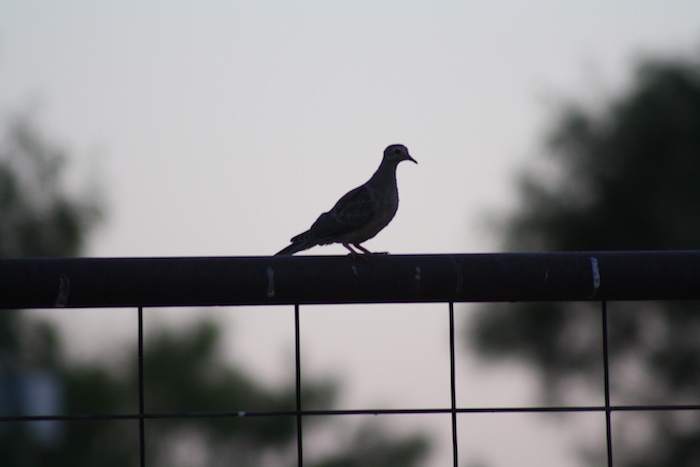
Hamilton County, also referred to as “Cowboy Country” and the “Dove Capital of Texas”, is located deep in the heart of central Texas on the Edwards Plateau. It is a convenient drive from several major cites in Texas including Dallas, Fort Worth and Austin. On the cusp of the Texas Hill Country, Hamilton County boasts beautiful hills broken by scenic valleys. Hamilton County History Tawokoni, Tonkawa, Waco and Comanche Indians were the first settlers of the area. Anglo-American arrived in the mid 1850’s following Texas’s independence from Mexico. Both county and town are named after James Hamilton, former Governor of South Carolina, who aided the Texas Revolution and Republic. Hamilton later drowned off the coast of Galveston after first giving his life-vest to a woman and child. This spirit of selflessness is also reflected in local 19th Century heroine Anne Whitney of Hamilton County. Anne was a schoolteacher who died protecting her students when Comanches attacked her one-room schoolhouse. It is this trait of selflessness that is claimed to be passed down from generation to generation and continues to reside in the hearts of the people of Hamilton County. Hamilton County Places of Interests The city of Hamilton, the county seat of Hamilton County, is located at the intersection of U.S. Highway 281, and State Highways 22 and 36. It is home to the beautiful native limestone Hamilton County Courthouse that was built in 1887 and now listed on the National Register of Historic Places. The courthouse also serves as the county museum where visitors can observe Texas history. The Bullman Bridge is another historical structure in this area. Built in 1884, it is the most complete and substantial of the remaining bowstrings bridges in Texas. Hamilton is also home to a 4-acre rodeo arena where competitions are held  monthly and "Cowboy Country" comes to life. Click here to view more details. Hico, a quaint city full of Texas charm where “Everybody is Somebody”, is located a short 20 minutes up the road from Hamilton at the intersection U.S. Highway 281, and State Highways 6 and 220. Ranching and tourism dominate the economy of Hico. Antique shops line the old town square and many come to visit each year to participate in events that you can only do in Hico! A few of these include Billy the Kid Museum, Hico Crater, Hico Antique Fair, Texas Steak Cook-off and more. Old Settlers Days, started in 1882, one year before Hico was incorporated, is the oldest event of its kind in Texas! Click here to find out more. Top Crops in Hamilton County (acres) Forage-land used for all hay and haylage, grass silage, and greenchop Wheat for grain, all Winter wheat for grain Oats for grain Sorghum for grain Top Livestock Inventory Items (number) Cattle and calves Goats, all Sheep and lambs Layers Quail The "Dove Capital of Texas" Hunting is a big part of the economy in Hamilton County. Deer, quail, duck, turkey, hog and varmint hunting can be excellent throughout the area.  Hamilton County calls itself the “Dove-Hunting Capital of Texas” and holds an Annual Dove Festival at the late-summer opening of the dove-hunting season. The Texas Parks and Wildlife Department’s dove program leader states that migration route analysis indicates food production is the compelling factor for doves. They have researched many variables related to dove densities and grain production is at the top of their list. Bret Polk, Hortenstine Ranch Company agent and native resident of the area states, "I've hunted in and around Hamilton County all my life, and can attest that those who properly manage their land to promote dove hunting, quickly come to understand why it is known as the Dove Capital of Texas." Hamilton County provides the ideal habitat diversity for dove. When settlers introduced livestock and grain farming to the area, made clearings in the forests, and planted trees on the prairies, they inadvertently created the perfect landscape for this edge-dwelling species. Even today the shade trees, waste grain, weed seeds, bare ground, and water found around modern farms and ranches in Hamilton County continue to attract mourning doves for man's year-round enjoyment. In an effort to enhance wildlife habitat, Texas Parks and Wildlife has established five wildlife management associations within the county: Leon River Wildlife Management Association, North Vista Mountain Wildlife Management Association, Pecan Wells Wildlife Management Association (also part of Coryell County), Southwest Hamilton Wildlife Management Association and Plum Creek Wildlife Management Association. These associations are groups of private citizens joined together to manage their property for the benefit of wildlife.  Hamilton County has seen many benefits from these associations such as cooperating with neighbors to enhance habitat values on a larger level. Mourning doves are an important economic, recreational, and esthetic resource which Texans share with people from around the world. Mourning doves easily locate areas of superior habitat but quickly leave areas that no longer provide adequate food, water, cover, or security requirements. With proper management, the mourning dove will always be an important part of Hamilton County. To view hunting seasons within the county click here. Click here to view ranches available for purchase in Hamilton County.